


Why Partial Vehicle Wrap Prices Vary
Partial vehicle wrap pricing depends on the design because the layout determines the areas covered, the material needed and the installation work. Two designs for the same van can create different jobs. A clear coverage plan can support a quote before every artwork detail is finished.
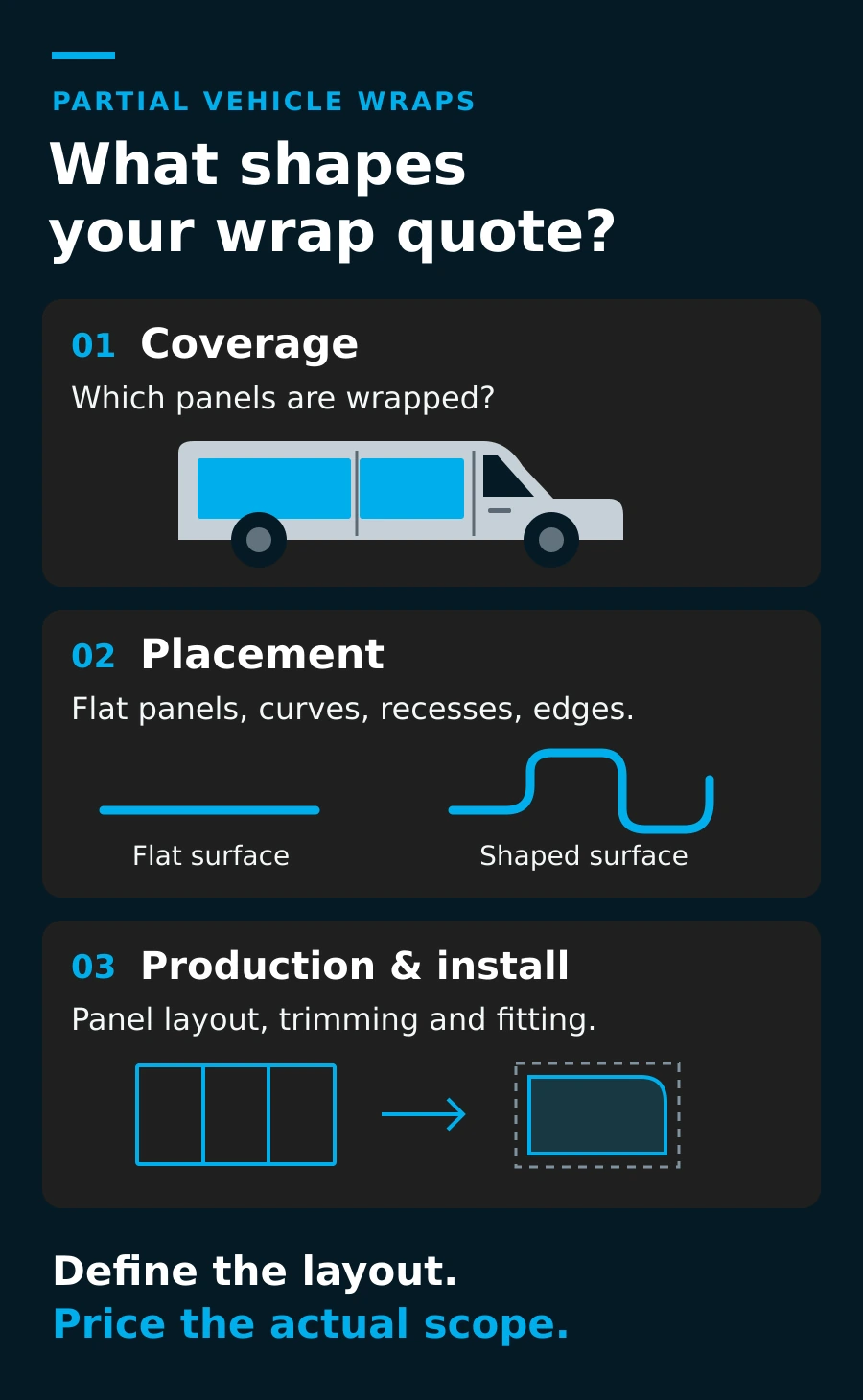
A partial wrap needs a defined coverage plan
“Partial wrap” describes selected areas of a vehicle being wrapped. It doesn't specify a fixed percentage, a particular set of panels or one standard price.
For a business van, that could mean graphics contained within the side panels. Another layout might continue around the rear corners and onto the back doors. Both can be partial wraps, with different material and installation requirements.
When we talk about the design affecting price, we're talking about those physical decisions: where the graphics start, where they stop and which surfaces they cross. Our fleet vehicle wrap FAQ identifies scope, vehicle details, materials and installation complexity as pricing factors.
The same van can require two different installations
Consider two hypothetical layouts for the same service van:
- Layout A: A branded graphic sits on a relatively flat side panel and ends before the rear corner.
- Layout B: A similar amount of visible graphic continues around that corner and into a recessed area on the rear door.
Layout B can involve more fitting and finishing, even if the visible coverage looks similar. The installer has to work with the shape of the vehicle, and the film must be suitable for those surfaces.
This is a practical installation difference. 3M's vehicle application bulletin sets out different methods and film compatibility for different contours and recesses.
For a fleet, check the actual vehicle configurations too. A design that fits one body style may need a different layout on another. The year, make and model help establish what is being quoted; roof height, body length and door configuration help make that description more useful.
Visible coverage is only part of the material plan
The finished graphic shows what remains on the vehicle. Production also has to account for how the design becomes pieces of film that can be positioned, fitted and trimmed.
Some layouts use multiple printed panels. Those panels may need overlaps, and material is trimmed around relevant edges and openings. Avery Dennison's vehicle wrap guidelines explain panel overlap, positioning and trimming as part of the installation process.
That helps explain why a square-foot estimate based only on what you see in a mockup may miss part of the job. The design needs to be considered as a production and installation plan, as well as a finished image.
You can discuss pricing before every artwork detail is final
If you're still deciding what your vehicle should look like, start with the areas you want to cover and the information customers need to see. A rough layout or marked-up vehicle photo can make that conversation much more specific.
A ballpark estimate can be based on stated assumptions about coverage, materials and installation. A final quote needs a sufficiently defined scope. That scope can sometimes be settled while details such as wording or the arrangement of artwork are still being refined. Measurements or a vehicle survey may be needed to resolve questions about fit.
Not every artwork change changes the physical job. Moving a phone number within an otherwise unchanged printed panel may leave the coverage and installation the same. Extending that panel around a corner changes what needs to be evaluated.
Color count is another useful distinction. For standard printed graphics, Ink Monstr doesn't charge more for full color than for black and white. Specialized white-ink printing is an exception. Our article on color printing costs explains the difference.
What to send for a useful partial wrap estimate
Send what you have. These details help narrow down the work:
- Vehicle details: Year, make, model and configuration, plus how many vehicles are involved.
- Current photos: Both sides and the rear, with any existing graphics visible.
- Desired coverage: Which panels or areas you want wrapped. Marking up a photo is a useful starting point.
- Artwork status: Whether you have a logo, an early concept or a completed layout.
- Budget target: A range you're comfortable discussing, so the coverage options can be considered with that in mind.
When reviewing an estimate, ask: Which areas are included? What assumptions still need to be confirmed? Would changing the coverage or placement change the price? Those questions are more useful than comparing two numbers labeled “partial wrap.”
If you're planning graphics for a business vehicle or fleet, request a partial vehicle wrap quote with the details you have so far. We can start with the vehicle and intended coverage, then work through the design questions that affect the scope.

Interested in finding out more?
Ready to get an estimate going? Or do you need to chat with our team to run through the details?
Contact us today and we can assist you.
Send Us Your
Message!
Whether you're looking to brand a new office, add culture and branding to your walls or turn your fleet of vehicles into mobile billboards; bring your brand vision to life with Ink Monstr™ Graphics & Wraps!


